Heritagescapes

We are mapping a heritage ecology of the metropolis of Madrid presented through theories, histories and designs.

A Critical Mapping of the Metropolitan Cultural Landscape: Future Heritages

Research project developed by the Cultural Landscape Research Group GIPC of the Madrid School of Architecture at the Universidad Politécnica de Madrid, with the participation of the ADAPTA Research Group at the Universidad Complutense de Madrid. 
Grant PID2022-140500NB-I00 funded by: 

The Frontline Around Madrid: Comparison Between Battle Maps and War Remnants Density Maps of the Spanish Civil War in Madrid

Nicolás Mariné

Curating Heritage. On the Future of the Past in the Everyday Landscape of the Metropolis of Madrid

Rodrigo de la O and Eduardo de Nó

Everyday heritage: Representation and landscape in the region of Madrid

David Escudero and Diego Toribio

Architecture and landscapes for agricultural research in Madrid: documenting scientific and technological heritage

Rodrigo de la O and Eduardo de Nó

Are We What We Eat? A Heritage Perspective on the Agri-food Landscapes of the Madrid Region

David Escudero, Beatriz Pereira

Water to Feed Madrid: 18 km of Orchards and Nurseries Along the Course of the Canalillo

Carmen Toribio

Gardens of yesterday and today, their persistence in the City of Madrid: Comparative study of the Transformation of Private Gardens in Madrid

Lucía Gamboa Sánchez Blanco

Vestige, Signal and Onset of an Event: Sundays at the Rastro

Marina Gil Escalada

Reclaiming the City Through Its River: The Case of the Manzanares

Claudia Rivera Lario

Domestic Architecture in the Sierra de Guadarrama: 20th Century

Guillermo García Prieto

Industrial Madrid: evolution and permanences Around Atocha

Marta Abadín García

Devices of the Real, Collective Devices

Carlo Udina Rodríguez

Between the Playful and the Working-Class: An Atlas of Goya’s Madrid

Juan Castro Sánchez

Towards a Master Plan for the Landscape of Light: Paseo del Prado and Buen Retiro, Landscape of Arts and Sciences

Pablo Jaque Valdés

From water to landscape: the transformation of the Royal Site of Aranjuez through Hydraulic Engineering

Carlos Corisa Andarias

From the kitchen to the landscape. Architectures of Cocido in Madrid.

Beatriz Pereira

Among productive landscapes: the former El Águila brewery in Villaverde, Madrid.

Diego Sacristán

Adaptive reuse and heritage practice: Origins, meanings and strategies

Graziella Trovato

Unveiling Madrid’s Visual Imagery: An Ongoing Attempt

David Escudero

Navigating the Meaques Stream in the Casa de Campo

Clara Cernou

The water footprints of enlightened Madrid and the hydraulic legacy of Juan de Villanueva

Eugenia Abejón

Transhumance Landscapes and Nature-Based Tourism

Cecilia Arnaiz and Marifé Schmitz

Castle of Villaviciosa de Odón: A Scientific Heritage of Forestry Research and Education

Eduardo de Nó

Heritage Networks in Villaverde’s Industrial Landscape

Rafael Guerrero

Ecology of the Royal Sites: The Livestock Trails of El Escorial

Eva Calderón

Co-Design in Urban Framing

Finca formativa "Huerto El Pozo"

The GIPC

Rethinking Public Spaces through Urban Farming

Concha Lapayese, Francisco Arques y Diego Martín-Sánchez

Unveiling Agricultural Heritage

Marina López-Sánchez

Historic Nurseries: A Cultural and Natural Legacy in Transformation

Carmen Toribio

Hydraulic Heterotopias: The Image of Technique

Carmen Toribio

Surrounding the Non-Urbanized Villa de Vallecas

Marina López-Sánchez

Curating Heritage Ecologies

Adaptive reuse and heritage practice: Origins, meanings and strategies

MWP-I
MAPPING INFRASTRUCTURES AND
NATURECULTURE VALUES
Info

Graziella Trovato reflects on adaptive reuse as a heritage and ecological practice, capable of (re)activating memory, culture, and social commitment through architecture.

In recent decades, heritage discourse has burst into contemporary architectural debate, not so much out of a concern for conservation, but as a source of opportunities for the project. This shift in focus has evolved in parallel with the expansion of the concept of heritage, driven by various international charters and declarations that have broadened its scope to include tangible, intangible, cultural, and social dimensions. In this context, «adaptive reuse» has gained prominence as an intervention strategy, especially since the 1970s with the energy crisis and the repurposing of industrial buildings. Figures such as Giancarlo De Carlo and the Lacaton & Vassal studio have shown how reuse is not simply a technical operation, but a critical attitude that highlights the cultural significance of what exists.

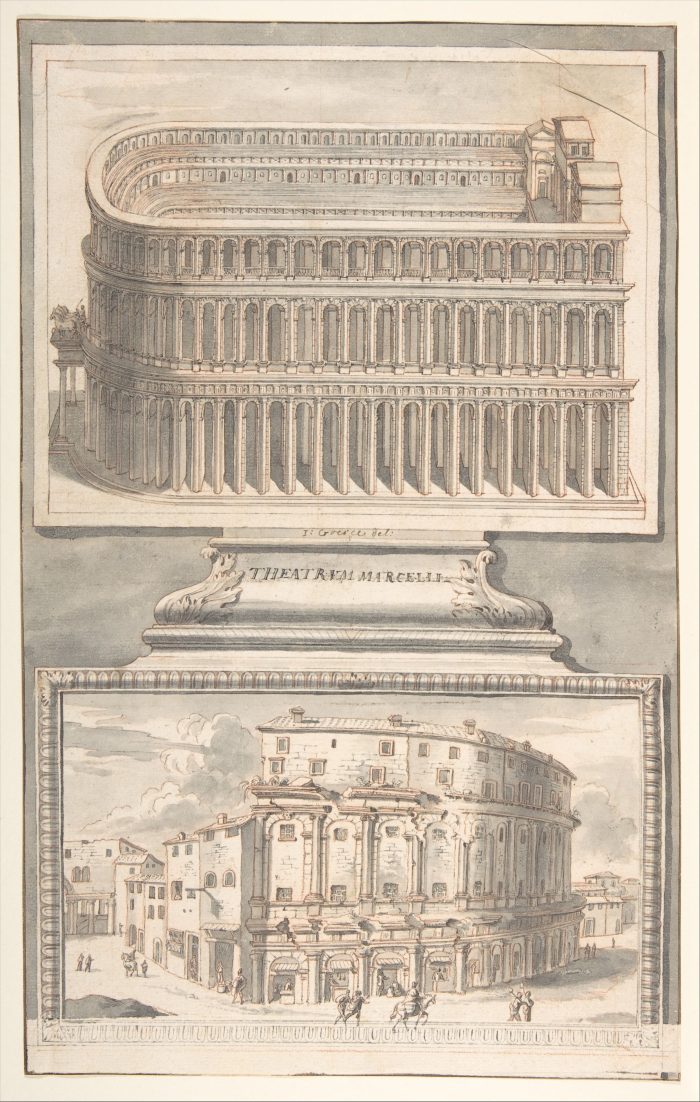
Adaptive reuse is, therefore, a heritage practice that, from its origins in the reuse of building materials from the ancient world to its theoretical consolidation in the 20th century, has played an important role in the redefinition of material resources: during the Middle Ages, the use of Roman structures represented a functional and symbolic strategy of reappropriation; with the arrival of industrialization and the social changes of the 19th century, reflection on heritage became institutionalized, giving rise to normative criteria for intervening in existing structures; and later, throughout the 20th century, the debate diverged: on the one hand, a movement emerged that instrumentalized history as a formal repertoire, and on the other, a more integrative vision developed that advocates for the cultural and social value of the urban fabric. The latter approach is articulated around the concept of «reuse,» understood not as simple recycling, but as a way to activate and keep inherited architecture alive.

Reconstruction of the Theater of Marcellus (above) and a View of the Ruins (below). Jan Goeree, before 1704. Source: The Metropolitan Museum of Art, public domain (Collection API). Available at https://www.metmuseum.org/art/collection/search/336083 (Last accessed July 2025)

Reconstruction of the Theater of Marcellus (above) and a View of the Ruins (below). Jan Goeree, before 1704. Source: The Metropolitan Museum of Art, public domain (Collection API). Available at https://www.metmuseum.org/art/collection/search/336083 (Last accessed July 2025)

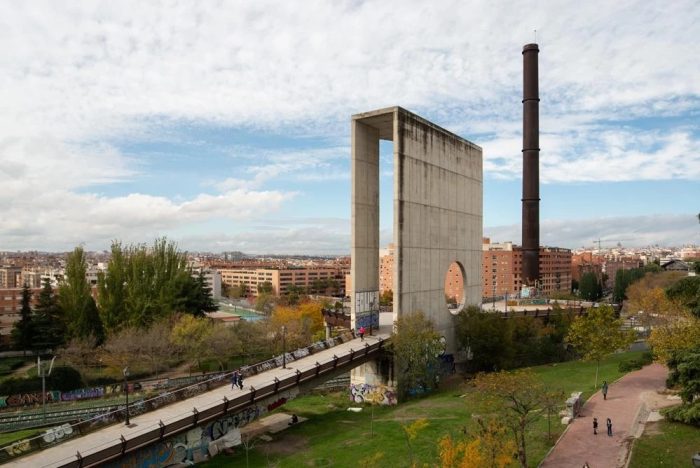
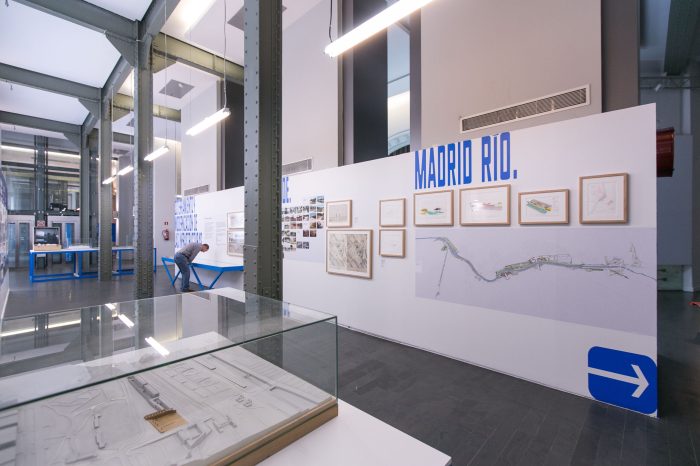
In this sense, the research project TRAHERE (Train Heritage Reuse) examines the case of post-industrial Madrid on the former terraces of the Manzanares River. This initiative, materialized in the exhibition «Entre río y raíles» (curated in 2022-23 by the author in CentroCentro, Madrid), focuses on studying the city’s urban heritage from a critical and transversal perspective, addressing both built and natural heritage. Through cartography, models, interviews, and documentary analysis, the project proposes a reading of the territory that makes visible the processes of urban transformation, highlighting memory gaps and proposing reuse strategies that are sensitive to current social needs. In this sense, heritage intervention ceases to be an exclusively technical act and becomes a tool of resistance against gentrification and uprooting. It also reviews the traditional model of heritage protection, highlighting its limits and contradictions.

South Gate, next to the Planetarium, in Enrique Tierno Galván Park (Railway Green Corridor, Madrid). Photograph taken by Davide Curatola Soprana for the TRAHERE project (2020).

South Gate, next to the Planetarium, in Enrique Tierno Galván Park (Railway Green Corridor, Madrid). Photograph taken by Davide Curatola Soprana for the TRAHERE project (2020).

Through this same approach, the exhibition «Cronocaos» (curated in 2010 with OMA/AMO at the Central Pavilion of the 12th Venice Architecture Biennale) highlights how many current interventions end up emptying protected buildings, retaining only their envelope as superficial decoration. In contrast, initiatives such as the exhibition «Rehabitar en nueve episodios» (curated in 2010 by the Rehabitar group of the Universidad Politécnica de Cataluña at La Arquería de Nuevos Ministerios, Madrid) advocate an approach focused on uses and the transformation of everyday life, without altering the essence of architecture. This paradigm shift entails understanding heritage not as a collection of untouchable objects, but as a dynamic and living system, whose value lies in both the tangible and intangible.

Ultimately, thinking in terms of adaptive reuse today requires a critical and committed attitude, beyond recycling or superficial conservation. It is a practice that articulates sustainability, memory, inclusion, and culture. In an era marked by precariousness, political opportunism, and excessive consumption, adaptive reuse is presented as a post-production strategy that allows us to inhabit the world in a more conscious, supportive, and creative way. Far from representing a nostalgic solution, reuse is a political and cultural act of prime importance in contemporary architectural and urban debate.

Exhibition “Between River and Rails,” at CentroCentro, Madrid (2022-23). ​​Photograph by Lukasz Michalak for CentroCentro (2022).

Exhibition “Between River and Rails,” at CentroCentro, Madrid (2022-23). ​​Photograph by Lukasz Michalak for CentroCentro (2022).

Reconstruction of the Theater of Marcellus (above) and a View of the Ruins (below). Jan Goeree, before 1704. Source: The Metropolitan Museum of Art, public domain (Collection API). Available at https://www.metmuseum.org/art/collection/search/336083 (Last accessed July 2025)
South Gate, next to the Planetarium, in Enrique Tierno Galván Park (Railway Green Corridor, Madrid). Photograph taken by Davide Curatola Soprana for the TRAHERE project (2020).
Exhibition “Between River and Rails,” at CentroCentro, Madrid (2022-23). ​​Photograph by Lukasz Michalak for CentroCentro (2022).